Research
August 30, 2026
The Seahorse Emoji Mandela Effect
No. There is no seahorse emoji, there never has been, and it was never removed. The interesting part is why so many people are certain otherwise.
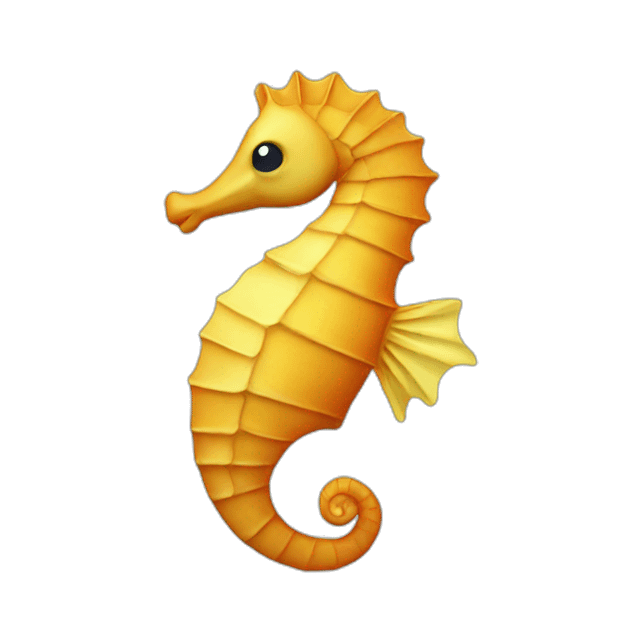
Search for a seahorse in your emoji keyboard and you will not find one. Not on iOS, not on Android, not on Windows, not in WhatsApp or Slack. There is no seahorse emoji in Unicode, the standard that decides which emoji every device supports, and there has never been one.
Yet a very large number of people remember using it. Some remember the colour — usually yellow or orange. Some remember which direction it faced. Some remember exactly where it sat in the animal section, between the tropical fish and the blowfish.
All of those memories are false. This is one of the cleanest examples of the Mandela effect on the internet, and in 2025 it picked up a strange second life when AI chatbots started insisting the emoji was real too.
No, it was not removed
The most common explanation people offer is that the seahorse emoji existed and Unicode took it away. That cannot have happened, for a structural reason worth understanding.
Unicode has never removed an emoji. Once a character is encoded it is permanent, because deleting it would break every message, document and web page that already used it. A message you sent in 2016 has to still render in 2026. The standard only ever adds.
So the removal theory is not just unsupported — it describes something the system is designed to make impossible. If a seahorse emoji had ever shipped, it would still be on your keyboard today.
What the false memory actually looks like
The striking thing is not that people are vague about it — it is how specific they are. A widely-shared thread on r/IndiaTech in 2025 is a good example. The poster described spamming the seahorse emoji in their father's chat for fun, and remembered the annoyed reaction when it flooded the conversation. That is not a hazy impression. It is an episodic memory with a person and a scene attached.
The comments are more revealing still. Several people offered confident explanations that contradicted each other: that it was a WhatsApp-only custom emoji, that it existed before Unicode standardised emoji, that some platform quietly dropped it. One user posted a screenshot of an animals keyboard as proof — and another replied that they could not find it on their own phone and asked whether the image had been edited.
That exchange is the Mandela effect compressed into two messages. A confident memory, a piece of supporting evidence that does not reproduce, and a plausible-sounding explanation invented to bridge the gap. None of the theories are correct, and the reason is simple: you cannot find it on your keyboard because it was never there.
Where the false memory comes from
There is no single cause, but several ingredients combine well:
- The sea is crowded. Unicode has 🐠 tropical fish, 🐟 fish, 🐡 blowfish, 🐙 octopus, 🦑 squid, 🦐 shrimp, 🦞 lobster, 🦀 crab, 🐬 dolphin, 🐳 whale, 🦈 shark and 🪸 coral. A seahorse feels like it belongs in that set, and the brain fills the gap.
- The word is two other emoji. "Seahorse" reads as sea + horse. Both halves have emoji — 🌊 and 🐴 — which makes the compound feel familiar before you have checked.
- You have definitely seen seahorse icons. Just not in Unicode. Sticker packs, game assets, icon libraries, aquarium apps and messaging add-ons all include them. The memory is real; the source is misattributed.
- Confident retelling spreads it. Mandela effects strengthen when people compare notes. Each person who says "yes, I remember it too" makes everyone else more certain.
The one place a seahorse really did exist
Here is the genuine twist, and it is a good one. Emojipedia turned up a seahorse in an unexpected place: the Toshiba Rupo JW 95F, a Japanese word processor from 1988. Among its built-in pictorial characters, a seahorse appeared fifth in a zodiac lineup, standing in for the dragon.
That predates the emoji sets people usually credit as first — SoftBank's 1997 collection and NTT DoCoMo's 1999 set. But it never travelled. The device was obscure, the characters were specific to it, and none of it fed into Unicode.
So a seahorse pictograph did exist on a machine almost nobody used, decades before smartphones. It is not the emoji anyone remembers, and it is not why they remember it.
Why AI chatbots insist it exists
In late 2024 people noticed something odd, and by 2025 it was a full internet phenomenon: ask a chatbot whether a seahorse emoji exists and it frequently says yes, then falls apart trying to produce one. Some sessions cycle through dozens of unrelated sea creatures. The failure has been reproduced across ChatGPT, Claude and Gemini.
The mechanism is instructive. Language models split text into tokens, and "seahorse" breaks into sea and horse. Both tokens sit close to real emoji in the model's internal representation, so the model predicts that a seahorse emoji should be there. When it reaches for the actual character, nothing matches — and rather than stopping, it keeps guessing.
It is a neat illustration of a real limitation: these systems predict what is likely, which is not the same as checking what is true. By 2026 both OpenAI and Anthropic had adjusted their models to catch the error faster.
What to use instead
If you need something seahorse-adjacent, these are the closest approved options, and all of them work everywhere:
- 🐠 Tropical fish — the usual stand-in
- 🐡 Blowfish — closest in silhouette
- 🦐 Shrimp — small curled sea creature
- 🐙 Octopus — for anything ocean-oddity
- 🌊 Water wave — pair it with 🐴 if you want the joke
You can copy any of these from our animals & nature collection, or browse animal emojis for the full set.
Will it ever be added?
Not in the near future. A seahorse was last seriously proposed to Unicode in 2018 and was declined. Nobody has made a substantive attempt since, and a seahorse is not among the candidates for Emoji 18.0, expected in September 2026 — that shortlist includes a pickle, a meteor and a monarch butterfly.
Given how much attention the phantom has attracted, a fresh proposal seems plausible eventually. Until then, the answer stays no.
Frequently asked questions
Is there a seahorse emoji?
No. There is no seahorse emoji in Unicode, and there never has been one on any mainstream phone keyboard. If you are looking for something close, the nearest approved options are 🐠 tropical fish, 🐡 blowfish, 🦐 shrimp, 🐙 octopus and 🌊 water wave.
Was the seahorse emoji removed?
No. Unicode has never removed an emoji from the standard — doing so would break every message that already used it. An emoji cannot be deleted once encoded, so a seahorse could not have been removed. It was simply never added.
Why do so many people remember a seahorse emoji?
It is a Mandela effect: a vivid collective false memory. The likely ingredients are the many real sea-creature emoji, seahorse icons in other icon sets and games, and the fact that 'seahorse' reads as sea + horse, two concepts that both already have emoji.
Did a seahorse emoji ever exist anywhere?
Yes, in one obscure place. Emojipedia documented a seahorse among the pictorial characters built into a 1988 Toshiba Rupo JW 95F Japanese word processor, where it appeared fifth in a zodiac lineup in place of the dragon. It was never part of Unicode or any mainstream emoji set.
Why does ChatGPT say the seahorse emoji exists?
Because the word splits into the tokens 'sea' and 'horse', both of which sit near real emoji in a language model's internal representation. The model predicts that a seahorse emoji should exist, then cannot produce one, and often spirals through dozens of unrelated sea creatures instead.
Will a seahorse emoji ever be added?
Not soon. A seahorse was last seriously proposed to Unicode in 2018 and was declined, and no substantive proposal has followed. It is not among the candidates for Emoji 18.0 expected in September 2026.